Gone Writing (but not without a little something for you)

This week I’m diving deep on some work that’s been needing special attention. I’m glad to plunge, but then that means it’s quiet in my kitchen. There are lots of simple, little meals though: Lebanese eggs with asparagus, soft-scrambled; snack; and a quick pasta (sauté zucchini and mushrooms with garlic, add some cream, then the cooked pasta and cook down the cream a bit with all of it. Shower with a squeeze of lemon and a fist of grated Pecorino Romano cheese, and you’re eating nicely).

OK, maybe a slice of pizza as well, with green olives (my favorite). I can’t say the box of See’s chocolates my sister sent my mom for Mother’s Day isn’t getting its fair share of special attention too….

While I’m down deep over here, I’m thinking of you, as I do every single week and in between. I thought I’d leave you with a few links to what’s been interesting me lately, for your perusal. As always, thank you ALL for the community you create with me here at Rose Water & Orange Blossoms! You are remarkable and special, and I appreciate your every click and comment so very much.

Soon we’ll be back in the kitchen together, doing what we do best! ‘Til then:

  •  Do you long to eat your way through Lebanon? This tour just might be the ticket.
  • This cookbook, The New Persian Kitchen by Louisa Shafia, is filled with the flavors of the Middle East. Beautifully written and designed, a great addition to your collection.
  • Someday, I hope to go here.
  • The Great Gatsby. So well done, a story I’ve always loved, with plenty of eye candy to boot (such clothes, houses, jewelry…excess excess!).
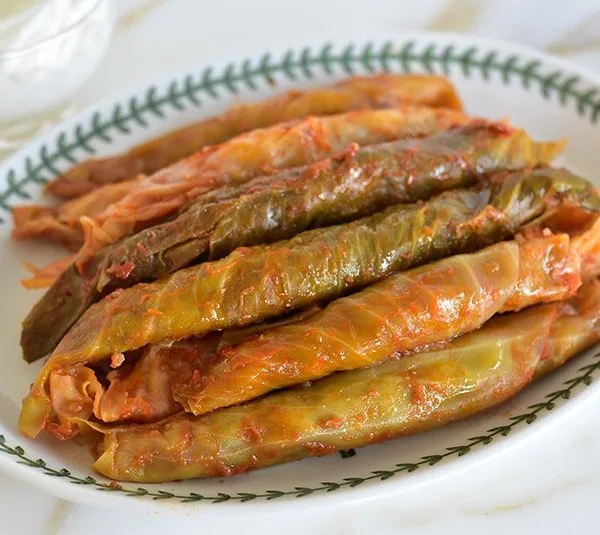
  • I’m happy to see the story I wrote about my first visit to Lebanon, and Lebanese grape leaf rolls, featured on The Huffington Post at HuffPostTaste this week. You can read it here. Your comments and shares are encouraged and much appreciated!
  • Many of you are subscribers to Rose Water & Orange Blossoms, a total delight for me and hopefully for you too! For those of you who are not, look to the right, just under my head shot photo, for the sign-up field. Subscribe to receive recipes, photos and stories from me in your inbox every week.
  • Are you on Pinterest? Wow, that place is a sensory delight (and, some say, overload…). Plus it’s so helpful for keeping all of the interesting links you find online organized for easy access. Follow my boards, and I promise to keep curating all kinds of good stuff, from recipes and kitchen designs to clothes, restaurants where I want to eat someday, and interior decorating (a girl can dream, can’t she?).

Have a great week everyone!

I'd love to hear from you. Please leave a comment.
Posted in Favorite Things | Tagged , , | 3 Comments

Postcard from Up North, circa 1976

The privilege of a lifetime is being who you are. — Joseph Campbell

(A mother and her five children, at the marina in Harbor Springs. She has given each one of us the privilege of a lifetime: being who we are, and being hers.)

I'd love to hear from you. Please leave a comment.
Posted in Picture Postcards | Tagged , , | 13 Comments

Strawberry Rhubarb Pie, a hint of Rose Water, & Mom’s Best Crust

Photos. Recipe. Perfect Pie, with a shorthand summary of my Mom’s Best Crust that makes it all so simple. Need I say more?

Yes, just this: Bake one, and enjoy.

Strawberry Rhubarb Pie, with a hint of Rose Water
The amount of fruit for the filling need not be exact. But it’s always better, I find, to err on the side of a bit more fruit than a bit less, for a full pie plate. I tend to use nearly the same amount of fruit for both a 9” or a 10” pie (it’s a very full 9-inch, and a nicely full 10-inch). The tapioca is an ideal filling thickener, but be sure to use the “quick cooking” variety rather than “small pearl” which won’t cook as readily. Use a rimmed pie plate for ease of sealing and crimping. This pie is easily made vegan by leaving out the dotted butter and the milk glaze. Makes one 9- or 10-inch pie.

For My Mom’s Best Crust:
For a 9” double crust pie:
1 ¾ cups unbleached, all-purpose flour
1 teaspoon salt
½ cup plus 1 teaspoon vegetable, canola, or other neutral oil
4 tablespoons ice water
¼ cup milk (of any sort)

For a 10” double crust pie:
2 2/3 cups unbleached, all-purpose flour
1 ½ teaspoons salt
¾ cup plus 1-2 teaspoons vegetable, canola or other neutral oil
5 tablespoons ice water
¼ cup milk (of any sort)

For the filling:
2 ½ cups strawberries, hulled and coarsely chopped
2 ½ cups rhubarb, cut in ½-inch pieces
1 3/4 cups sugar
1/3 cup quick-cooking tapioca (dry/uncooked)
½-1 teaspoon rose water (optional)
2 tablespoons cold unsalted butter, cut into small pieces
¼ cup milk, also noted in the pie crust recipe and just a reminder here, to glaze the pie

Place the rack in the middle of the oven with another rack below. Place a large sheet of foil on the lower rack to catch drips. Preheat the oven to 425 degrees.

In a large bowl, combine the strawberries, rhubarb, sugar, tapioca, and rose water if using. The amount of rose water you add here depends on how strong yours is in flavor; a light touch is best, so start with 1/2 teaspoon and if a light fragrance of rose is present with the fruit, that’s enough.

Prepare the pie crust as described in detail in the crust recipe. To summarize, in a medium bowl, whisk the flour and salt, stir in the oil, then add the water. Add an additional teaspoon of oil if the dough seems at all dry. On a damp work surface, roll out half of the dough between two sheets of waxed paper to a circle 2 inches larger than the pie plate, remove top sheet of paper and invert over the pie plate. Ease the dough down into the plate. After trimming the bottom layer and before rolling out the top layer, pour the sugared fruit into the bottom crust in the plate. Dot the top of the pie with butter.

Roll out the top layer between two fresh sheets of waxed paper on a damp work surface, to a circle 1 inch larger than the pie plate. Remove the top sheet of paper and invert over the pie. Leaving a 1/2-1 inch overhang, trim, tuck the overhang under the bottom layer, and crimp. Cut vents decoratively in the top. Rub or brush the entire top of the pie with milk. Cover the edges of the pie with a pie guard or pieces of foil, crunching it well so it stays in place. The foil is not a perfect science; just get it to cover as much of the edge as possible.

Bake for 40-50 minutes, removing the foil for the last 15 minutes of baking so the edges brown up. When the fruit can be seen bubbling up vigorously in the vents and the crust is golden brown, the pie is ready. Remove from the oven and cool; the filling will firm up some as the pie cools. Serve lukewarm or at room temperature. The pie will keep on the kitchen counter for a couple of days, loosely covered with waxed paper or foil.

Print the pie recipe here.

Print the detailed crust recipe here.

I'd love to hear from you. Please leave a comment.
Posted in Stories and Recipes | Tagged , , , , , , , , | 9 Comments

My Mom’s Best Pie Crust

Everyone who knows my mother knows that the hallmark of her character is grace. Pure grace. This is reflected in her face, her home, her kitchen, her conversations.

And her pie.

I love watching people taste my mom’s pie for the first time. Always, always (while chewing): what is this crust? Always, always: Mom glows.

The fillings for my mom’s pies are excellent, traditional, and sturdy. What puts them and any good pie in a class by themselves, though, is the crust, her crust: golden, shattering flakes and absolute readiness to crumble when eaten (and not before). Hint of salt, so necessary against the sweet fillings. Above all, of course, is the flavor of this crust. Here is supreme taste where there is no butter, and a flavor of toastiness that defines the very notion of deep golden brown. I find that unless it’s my mom’s crust, I tend to leave on the plate whatever crust wasn’t touched by filling. Hers I will eat every crumb off my plate and yours too if you look away for more than a second.

My mom’s pie crust is the gold standard, a legacy that began in the kitchen of her own mother of all grace, Alice. Alice famously, and regularly, pushed a piece of pie across the breakfast table to my father, with her irresistible enticement that a little piece won’t hurt you. It wouldn’t be pie on any of our plates at home without someone saying those same words as they pass thick slices around.

So you want to know about the details already?! OK.

Here we have an old fashioned, Betty Crocker-inspired oil crust. My mother’s Betty book has been a workhorse in her kitchen, primarily for a singular recipe—the crust—which mom has always known deep in her hands. But the pleasure of opening that book, a book she made her own by covering it with a scrap of her cheerful kitchen wallpaper, to make a pie is ritual.

The finer points:

  1. There is no butter, lard, or Crisco here. Welcome all vegans. No butter means no chill-and-keep-it-cold factor. Just flour + salt + water + oil. Use any neutral oil you like. My mom uses vegetable oil. I use canola.
  2. The texture of the dough depends on many factors like humidity and how the flour was measured (it’s best to scoop the flour into the measuring cup lightly, then level the top of the cup). The dough should be fairly soft and pliable, not cracking and dry. If you’ve added all of the water and the dough still needs some elasticity, slowly add more oil, 1 teaspoon at a time.
  3. The dough must be rolled out between sheets of waxed paper; without the paper, the dough will not come up off the counter. That makes for a bad pie baking day.
  4. To make my mother’s truly beautiful rope-style crimp on your pie, be sure the edges are fairly even and plenty doughy. When trimming and then tucking top rim under lower rim, steal dough from a side that has more than enough and patch an area around the rim in need, to come up with an even edge of dough.
  5. When making the rope crimp, squeeze the dough edge between thumb and bent first finger, on an angle. Repeat all the way around the pie, squeezing quite firmly so the pattern holds during baking.
  6. Our favorite flour is King Arthur’s Unbleached All Purpose.

The pies we’re baking right now are the ones we wait for all year: strawberry rhubarb. This pie is my mom’s favorite, for the sweet-tart flavor, yes, but also because this is always the first fruit pie of the year. Slip a drop of rose water in the pie, and there is yet another layer of fragrant beauty, graceful as the mother who made it.

(A recipe for the whole pie is coming tomorrow, under separate cover. A crust this good is worthy of its own post.)

My Mom’s Best Pie Crust
This oil-based crust is tender, flaky, and flavorful—everything you want in a pie crust. The texture of the dough depends on many factors like humidity and how the flour and oil are measured. It’s best to scoop the flour into the measuring cup lightly, then level the top of the cup. Use a liquid measuring cup to measure the oil (like a glass Pyrex measuring cup with pour spout) to ensure the oil is measured properly. The dough should be fairly soft and pliable, not cracking and dry. If you’ve added all of the water and the dough still needs some elasticity, slowly add more oil, 1 teaspoon at a time. Use a pie plate with a flat rim. Recipe is based on Betty Crocker’s, and makes one double crust pie.

For 9” double crust pie:
1 ¾ cups unbleached, all-purpose flour
1 teaspoon salt
½ cup plus 1 teaspoon vegetable, canola, or other neutral oil
4 tablespoons ice water
¼ cup milk (of any sort)

For 10” double crust pie:
2 2/3 cups unbleached, all-purpose flour
1 ½ teaspoons salt
¾ cup plus 1-2 teaspoons vegetable, canola or other neutral oil
5 tablespoons ice water
¼ cup milk (of any sort)

In a medium bowl, whisk together the flour and salt. Add the oil, all but the extra teaspoon, and lightly stir with a metal spoon until most of the flour is incorporated and pea-sized meal forms. There will be some larger clumps of dough too.

Add the water 1 tablespoon at a time, incorporating after each addition. The dough should be soft and pliable, not cracking and dry. Add another teaspoon of oil to get there if needed, but do not add extra water. Divide the dough in half.

Tear off two 15” sheets of waxed paper. Wipe the work surface with a sponge dampened with cold water to keep the paper from slipping. Place one sheet of waxed paper on the damp surface lengthwise in front of you, and place half of the dough in the center of the paper. Shape the dough into a flat disk and cover with the other sheet of paper lengthwise.

Roll the dough, starting from the center of the disk and working your way out in every direction (think of working around the clock). The dough and paper do not turn; they stay fixed. As the rolling pin moves to the outer edges of the dough, be careful not to press to hard or else the dough will get too thin at the edges. Press more in the center, less at the edges, as you roll.

Roll the dough 2 inches larger than the pie pan, making room for the dough to slide down into the pan and still cover the rim. The crosswise edges of the waxed paper can serve as a guide at 12 inches. Roll to that edge for a 10” crust, and just inside at 11 inches for a 9” crust. If the dough is rolled beyond the waxed paper, just scrape under it with a thin, sharp knife or spatula to loosen it before picking the crust up off the counter.

Peel off the top piece of waxed paper and discard. Place the pie plate right next to the crust. Pick up the crust with its paper and invert it over the pie plate. Move the crust to arrange it evenly over the rim of the plate. Remove the waxed paper and discard. Gently lift the edges of the crust and ease the crust into the pan. Trim the crust all the way around the rim right up against the rim. If an area is short of the rim, patch it with trimmings.

Fill the pie with filling, then roll the second half of the dough for the top crust just as you did the bottom crust, but roll this circle slightly smaller than the bottom crust (about an inch smaller). After the top crust has been arranged over the pie, trim the crust so that there is ½-1 inch overhang of the top crust beyond the rim. Tuck that overhang under the bottom crust all around the rim. This seals the pie and prevents drips.

Crimp the edges of the pie in a rope design: place your thumb on the pastry rim at an angle and firmly pinch the dough between thumb and bent index finger. Push down into the rim as you pinch. Make the next pinch with thumb resting against the last pinched edge.

Coat the top of the crust entirely with milk, using your fingers or a pastry brush. Cut vents in the top of the crust. Cover the edges of the pie with pieces of foil or a pie guard. Bake at various temperatures and times depending on your pie. A strawberry rhubarb pie bakes at 425 degrees for 40-50 minutes (foil removed for the last 15 minutes of baking).

Print this recipe here.

I'd love to hear from you. Please leave a comment.
Posted in Stories and Recipes, Techniques | Tagged , , , , , , , , | 14 Comments

Pie Plates: The best of

First off, the very best pie plate is any pie plate. Because any pie plate means there’s going to be a pie, and that’s the important thing.

That said, there are several facets of a pie plate that I pay close attention to when there is a selection to be made: depth, size, rim, and material.

In the kitchen of Maryalice, my mama, there is one plate that surpasses all others. I cannot link you over to this or that site so you can get one too, though perhaps you have something of a similar ilk, if not for pie then for other pursuits in your kitchen.

Her plate is part of family lore, and she thinks she could get herself quite a nice review of it at the Antiques Road Show. Heavy stoneware, scarred with the beauty of age and use, and decorated with graceful embossed green flowers, this was Alice’s pie plate, my mother’s mother. And Alice’s pie legacy, like my mother’s, is formidable.

The beloved plate is a big plate, but fairly shallow, and shallowness is one of the indicators of a good pie plate in our neck of the woods. A shallower plate rather than a deep dish fits our double crust recipe perfectly, and gives a good ratio of filling to crust (crust taking a starring role).

Also, on this and many other of our plates, there is no helpful indication of size on the bottom. Holding another plate up to it doesn’t always reveal a size, so measure it we must. This is not the only plate in the stack with no measurement on it, and though it’s safe to say that pie plates are 8”, 9”, or 10” and a frequent pie baker can tell at a glance which is which, sometimes you feel the need to measure, especially if there is only one plate and nothing to compare it to for relative size. Gotta know the size because crust recipes are based on that size, and amount of filling is measured against that too.

The correct measure of a pie plate is the diameter (haven’t used that word in a looooong time, thank God) across the top of the plate, from inside edge of any rim across to the opposite inside edge.

That rim may be disregarded for measuring, but it is key for our crust. I’m always at a loss when I have to bake a pie in a plate that doesn’t have that little lip around the edge, or if there is a rim but it’s wavy all the way around—which is too bad, because the Emile Henry plates are beautiful. But I’d never bake a pie in one. The crimping and decorating of the pie edge, Abood-style, requires the rim.

As for material, there is Alice’s pottery plate, but beyond that, we tend to use only glass plates. Pyrex, as standard and unsexy as it may be, works like a charm. I like to see how my crust is baking on the bottom, so the glass is great for that, and glass doesn’t influence baking times the way metals, often dark, can. Plus a glass plate stay nice nearly forever, and the metal ones get all scraped up inside with use—not the sort of patina that is endearing.

I realized recently how subjective the affinity for a particular pie plate can be. Cindy and I were discussing pie, and she reminded me of a pie plate I gave her, an Emile Henry, years ago. I said: but you don’t bake pie in it. She said, always I do. She loves the wavy edge and the deep dish, and said so in unison with me just as I was dissing the wavy edge and deep dish.

She did say that she’s looking for a new crust recipe, which I will give her (despite our differences) and all of you, this week. This crust, my mother’s crust, is finer than fine. So fine, I wager it’s going to be your new favorite, in any plate you choose.


I'd love to hear from you. Please leave a comment.
Posted in Favorite Things, Stories and Recipes | Tagged , , , | 6 Comments