
This post may contain affiliate links. Please read our disclosure policy.
Baba ganoush is an easy Middle Eastern dip made with charred eggplant, tahini, garlic, and lemon juice. It’s similar to hummus, but made with eggplant instead of chickpeas (and even easier to prepare)! I’m sharing my family’s recipe and all my top tips and tricks for the best texture and taste.
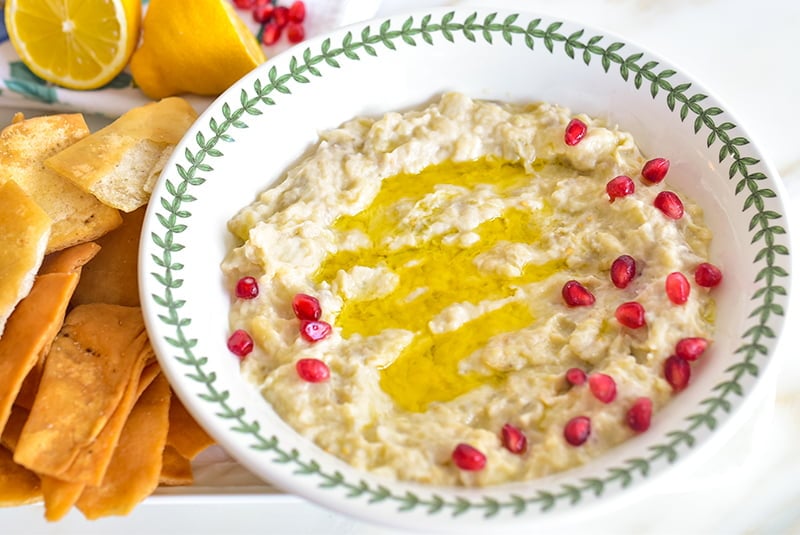
What is Baba Ganoush?
Baba ganoush (also spelled baba ghanouj or baba ganouj) is one of the most beloved dips in Lebanese and Middle Eastern cuisine, and a staple on any mezze table, including my own!
In Arabic, “baba” means father, a word I loved using for my own dad. “Ganoush” means spoiled or pampered. So this is essentially a dish for a beloved, pampered father. Just for that alone, I adore my baba ganoush, not to mention the flavor.
The dip is built on charred eggplant, which gives it that distinctive smoky depth no other ingredient can replicate. Combined with nutty tahini, bright lemon juice, and pungent garlic, the result is a dip that is silky, complex, and satisfying.
Unlike hummus, which is blended in a food processor until ultra-smooth, baba ganoush is traditionally mixed by hand, which gives it a rustic, slightly chunky texture that makes it irresistible for scooping up with crackers, pita chips, pita wedges, fresh veggies, you name it. You can use a fork, a spoon, or even a mortar and pestle; the goal is texture, not a puree.
Baba ganoush is popular across the Levant, Egypt, and throughout the Eastern Mediterranean, and every family has their own way of making it. This is mine: a Lebanese family recipe with a few key tips that make all the difference.
Baba Ganoush vs. Moutabal: Are They the Same?
This is a question I get often, and the answer depends on who you ask and where they’re from.
In Lebanon, baba ganoush and moutabal are often used interchangeably to describe the same eggplant-tahini dip.
In some other parts of the Middle East, the distinction matters: moutabal is the version with tahini, while baba ganoush refers to a version without tahini that includes chopped tomatoes, onion, and fresh herbs. Regional variation runs deep here, and both versions are delicious.
My recipe, with tahini, is the Lebanese way, and the one most people in the US recognize as baba ganoush.
Ingredient Notes
The beauty of this roasted eggplant dip recipe is that it achieves so much flavor with a few simple ingredients and tips. Here’s what you’ll need:
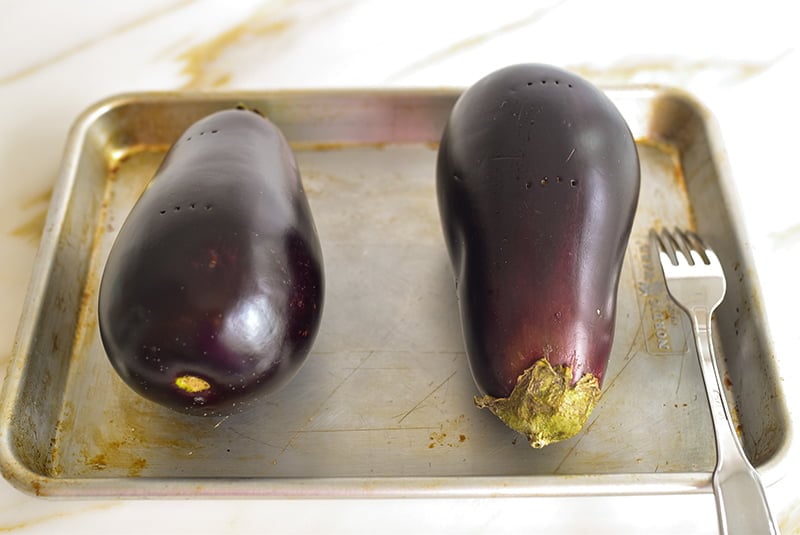
- Globe eggplant: These are the larger, deep purple eggplants. If you can’t find globe eggplant, Italian eggplant works as a substitute. Follow my tips for how to choose an eggplant when shopping. When you squeeze your eggplant at the market, there should be little to no give. Look for unblemished, shiny skin. Narrower, medium-sized eggplants tend to have fewer seeds. Save extras to make pan-fried eggplant, too!
- Tahini: Stir tahini well before you use it, as it can separate during storage (as you would making any tahini sauce). You want to avoid a spoonful of oil and make sure you’re scooping thick, luscious, emulsified sesame paste.
- Garlic cloves: Adjust to your taste—at least one large clove will be really flavorful. Garlic lovers will want even more! Fresh garlic has a lot more flavor than jarred prepared minced garlic.
- Fresh lemon juice: Freshly squeezed lemon juice has the brightest flavor.
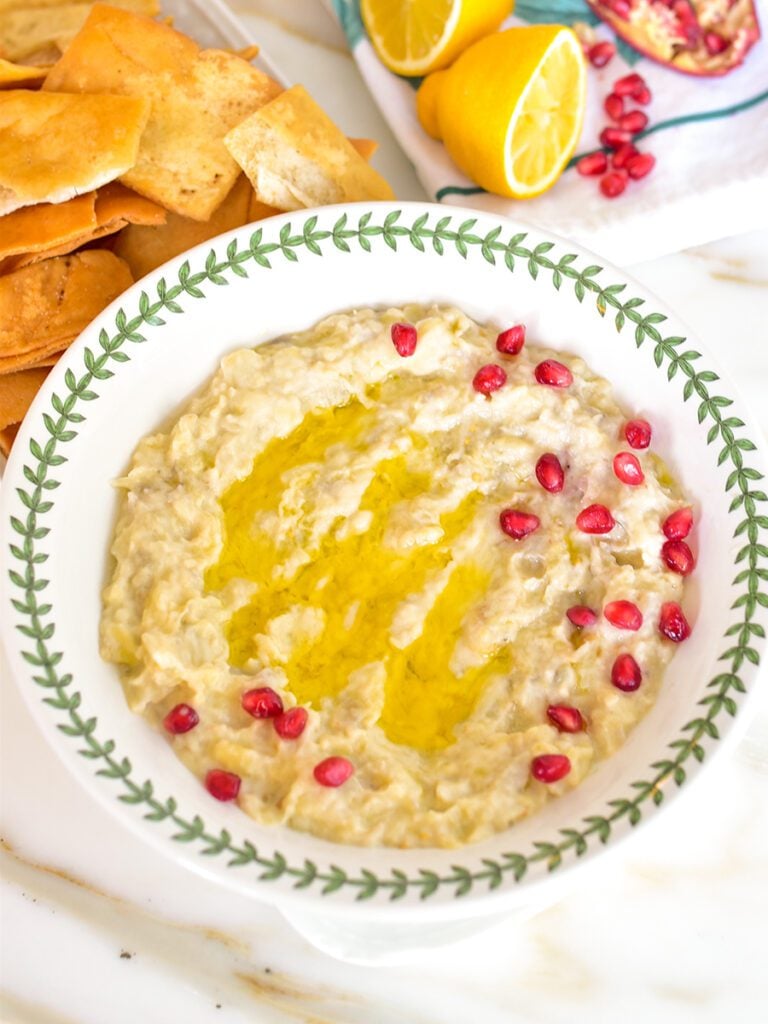
- Finishing touches: Sprinkle pomegranate seeds, sesame seeds, and/or fresh parsley or other herbs on baba gannouj, which adds color, texture, and more flavor. Though they are optional, pomegranate seeds in particular are colorful, and they have that pop of sweet-tart flavor that is so excellent with the smoky eggplant.
How to Make Baba Ganoush
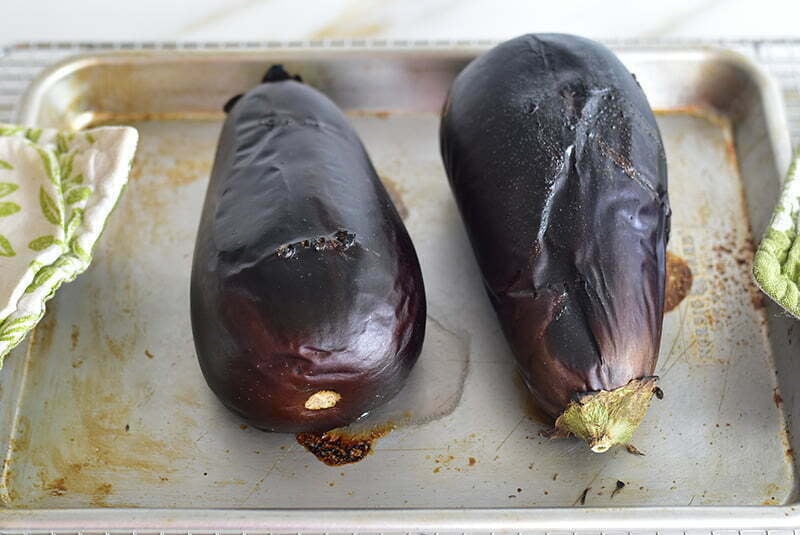
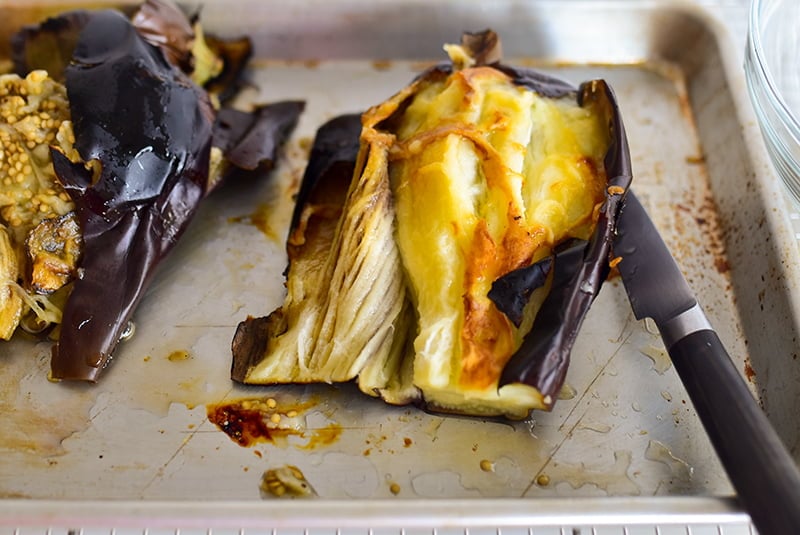
The char is everything. This step is what gives baba ganoush its signature smoky flavor, and there’s no shortcut for it. You cannot simply bake the eggplant in the oven and expect the same result. You need direct heat and some actual charring of the skin.
Before you start: poke a few holes in each eggplant with a knife or skewer so the skin doesn’t burst during cooking.
Char the Eggplant
Method 1: On the grill (best flavor). Place the whole eggplants directly on the grates over medium-high heat. Grill, turning every 5-7 minutes, until the skin is completely charred and blistered on all sides and the eggplant feels very soft and collapsed, about 20-25 minutes total.
Method 2: Over an open gas burner. Set a burner to high flame. Using metal tongs, hold the eggplant directly over the open flame, turning regularly, until the skin is charred all over and the eggplant feels soft, about 10-15 minutes per eggplant. This is the fastest method and gives excellent smokiness!
Method 3: Under the broiler. Arrange an oven rack a few inches under the broiler and set to broil on high. Place eggplants on a parchment-lined baking sheet. Broil, turning every 10 minutes, until the skin is charred and blistered all over and the eggplant is very soft, about 30 minutes. This is the easiest hands-off method. The smoke flavor is slightly less intense than the grill or gas burner, but still excellent.
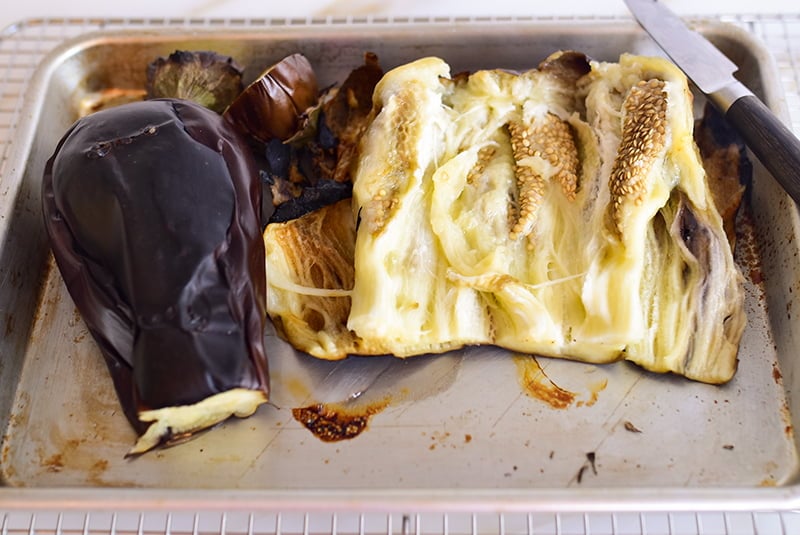
After charring: Transfer the eggplants to a bowl and cover tightly with plastic wrap or a plate. Let them steam for 10-15 minutes. This makes peeling much easier! Once cool enough to handle, peel off and discard all of the charred skin. Cut away the stem end.
Prepare the Dip
Remove the seeds. Open the peeled eggplant and pull out the lines of seeds. Discard them. This is one of my favorite tricks for reducing bitterness and creating a cleaner eggplant flavor. Don’t skip it!
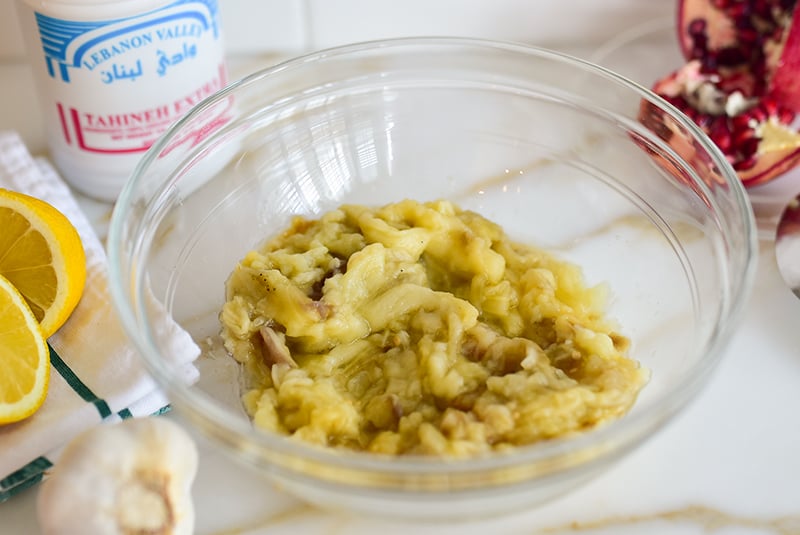
Chop or mash the eggplant. Chop the eggplant flesh roughly, then transfer it to a bowl. Using a fork or the back of a spoon, mash it to a dip-like consistency. You want some texture, not a smooth puree. Resist the food processor here. Blending or processing makes baba ganoush runny and loses the rustic texture that makes this dip so good.
Tip: A microplane grater is the fastest and easiest way to finely mince garlic for this recipe.
Mix and season. Add the tahini, salt, garlic, lemon juice, and black pepper to the bowl. Stir to combine. Taste and adjust, adding more lemon for brightness, more tahini for richness, or more garlic if you want more punch.
Plate and finish. Transfer the baba ganoush to a serving plate or into a bowl. Use the back of a spoon to make swirls across the surface. Drizzle extra virgin olive oil generously on top, and finish with a sprinkle of pomegranate seeds and fresh chopped parsley.
My Top Tips for Success
Making baba ganoush isn’t too tricky, yet here are a couple of tips to ensure your results are great:
- Remove the eggplant seeds. Every time. Seeds create a bitter flavor and only take a few extra seconds to remove. Doing so is well worth the time.
- Make your baba gannouj by hand! It may be tempting to use a blender or food processor for baba gannouj, but mashing or crushing by hand with a spoon yields the texture we’re looking for here, somewhat chunky. Look for little pieces of eggplant in the finished dish rather than a smooth puree. If you do prefer a smooth dip, you can opt for the blender or processor.
- Use high-quality ingredients. There are just a few ingredients in baba gannouj, so choose the best of everything for the best flavor. This is the time to grab your better olive oil (“finishing oil”), and to use fresh garlic (look for a firm head of garlic), fresh lemon juice, and firm, medium-sized eggplants.
- Dress it up. On its own, baba ganoush is a drab gray-beige color. The pomegranate seeds, olive oil drizzle, and fresh herbs transform it into a beautiful dish that’s as appealing to look at as to eat.
What to Serve with Baba Ganoush
Baba ganoush is so versatile! Some of my favorite ways to enjoy it include:
- As a dip: The classic way — serve with warm pita bread, homemade pita chips, or fresh vegetables. Cucumbers, carrots, celery sticks, snap peas, and bell pepper strips are all winners.
- On a mezze platter: Baba ganoush belongs on every Lebanese mezze spread alongside red pepper hummus, muhammara, labneh dip, tabbouleh, olives, quick pickles, and Lebanese stuffed grape leaves.
- As a bowl-style meal: Use baba ganoush as a base and pile on sautéed vegetables, spiced lamb or chicken, and little chickpea feta salad for a complete meal.
- As a spread: Smear baba ganoush on sandwiches or wraps in place of mayo or hummus. It’s excellent with grilled chicken, lamb, or roasted vegetables.
- With protein: Serve alongside shish tawook, Lebanese beef kafta, or pan-fried garlic tahini eggplant for extra flavor.
Storing Leftovers
The best way to store baba gannouj is in the fridge. It will keep fresh in an airtight container for up to four days.
Allow it to sit on the counter for fifteen minutes or so before serving to bring it up to room temperature. Stir well before serving and add a little lemon juice if needed to loosen.
Baba ganoush will freeze in an airtight container for up to 3 months, but it won’t have the same creamy texture as it does when served fresh.
Lebanese Baba Ganoush Recipe
Equipment
- 1 Large Bowl
Ingredients
- 2 firm globe eggplants
- 3 tablespoons tahini, well-stirred before measuring
- 1 teaspoon kosher salt
- 1 clove garlic, minced
- 2 tablespoons freshly squeezed lemon juice
- Few grinds of black pepper
- extra virgin olive oil, for drizzling
- 2 tablespoons pomegranate seeds
Instructions
- Char the eggplant by poking a few holes in them with a knife or skewer (so the skin won’t burst). Cook them on a hot barbecue, a low flame on the gas burner, or under the broiler. If you’re broiling the eggplant, place them on a parchment lined baking sheet a few inches under the broiler. Whatever the heat source, turn the eggplants over halfway through cooking (use tongs) to char them evenly. When the skin is blistered and the eggplant is very soft, remove them from the heat. Under the broiler this takes about 30 minutes.
- When they are cool enough to handle, peel the skin off with your fingers and cut away the stem end. Open the eggplant and pull out the lines of seeds, and discard them.
- Chop or mash the eggplant until it forms a dip-like texture. In a bowl, combine the eggplant with the tahini, salt, garlic, lemon juice, and black pepper. Taste and adjust the seasonings, then spoon the baba gannouj onto a plate. Make some swirls in the eggplant with the back of the spoon, and drizzle olive oil over the top. Sprinkle with pomegranate seeds, and serve with pita chips, crackers, vegetables.
Video
Notes
Nutrition
Nutrition information is automatically calculated, so should only be used as an approximation.















Fabulous recipe. Brings back memories of my life in Kywait
That’s special Ajay, thank you!
Very good cook
Thanks so much Nelly!
Wonderful video.. I’d like her cookbook.
Thank you Sunnie! You can order a signed, personalized copy of Rose Water and Orange Blossoms and you can pre-order my new cookbook Lebanese Baking here!
A great recipe! Easy to follow and a fantastic result.Many thanks
Thanks so much!
Excellent recipe, easy to follow turned out delicious. Will definitely be making it again
Oh great Jan, thankyou!
Just Excellent
Thank you Habib! Delicious!
My Sitto would use a colendar to strain out the seeds. I find it gives the baba a nice texture without the bitterness of the seeds.
Great, thank you Paul!
Hello Maureen,
I have been following your recipes and the blog. I have loved adding a bit of tangy yogurt to the hummus. I , also, added a A few tablespoons of pressed yoghurt to the baba ghanouj. It took the dip to a new level. Thank you for sharing your expertise and recipes with all of us.
Terrific Marianna, thank you!
Hi Maureen
I’m loving your recipes and your blog. It brings back my childhood memories of lovely food my mum and her Arabic friends made. I’m a huge fan of Lebanese and Arabic food. Every time I read your blogand recipes it makes me hungry and literally lick my fingers. Thank you for such delicious read.
Thank you Ruhana!
How much would two eggplants weigh?
Medium to large eggplants are about 1/2 pound each, so about a pound for two.
I’ve tried a couple baba gannouj recipes and this one is easily the best…and I didn’t even use the grill! I’ll be sure to try that when the weather is better. Also discovered that my cocktail muddler is an excellent way to get a good consistency for the dip, haha! Thanks for the fantastic recipe!!
So great, thank you Kate!
Love your blog !
Thanks so much for being here!
Thank you, Maureen, for the wonderful–and meaningful–quote! I thoroughly enjoy reading your blog and using your recipes to make delicious food.
Many, many thanks,
Linda
Thanks so much!
My dad always made his own Baba Ganoush……………now I can do it. Thank you so much!!!!Madeline Sanford.
That’s special Madeline! Thank you!
“I’d love to know who makes buffalo chicken wings at home, and then I’d like to get myself invited over.”
Consider yourself invited. My husband is from Buffalo: he grills (even in the winter, too messy to do it any other way), I sauce, everyone eats too many. With beer. Usually during a basketball game (ND vs Marquette use to be a favorite.)
Rosemary
Count me in!
that is,”My Mom grilling it on top of the stove!”
Can never have enough eggplant in any form-remember this so well from my Mother’s kitchen–and my Dad grilling it outside or my Mom on top of the stove–either way, charred to perfection!
I never get that smokey or charred flavor when I do Baba Gannouj…well now I think I will….I always roasted the eggplant in the oven but not under the broiler….who knew?? You did!! The best Bab Gannouj I have ever had (in a Restaurant) was in Brighton, MI. Not sure if the restaurant is still there, but it sure was the best. On to your recipe….yiiipppeee!